Location-page decision framework
| Situation | Decision | Reason |
| Real branch with unique details | Create | Distinct contact, team and customer need |
| Service changes materially by area | Create | Different process, constraints or proof |
| Only the place name changes | Consolidate | No distinct user value |
| Old thin page has links or history | Redirect | Preserve signals to the relevant hub |
| Area is not genuinely served | Do not publish | Would misrepresent coverage |
Review actual operations and demand before selecting a URL strategy.
Why this is not another local SEO guide
A broad local SEO guide covers the Business Profile, reviews, citations and local prominence. This article addresses one implementation decision: how to structure service-area pages without creating thin doorway content. It complements a Business Profile checklist and avoids duplicating a local-vs-national strategy article.
Start with actual coverage
List the areas the business genuinely serves, the travel or delivery limits, branch locations and any neighbourhood-specific constraints. Separate physical branches from service areas. A service-area business should not create pages that imply offices where none exist.
Use sales data, customer addresses, call notes, Search Console queries and paid-search location reports to identify meaningful demand. Avoid choosing neighbourhoods solely because a keyword tool shows volume.
Decide whether a location deserves a page
A location may deserve its own URL when it has a real branch with unique contact information; a distinct service mix; different regulations, property types or delivery conditions; enough customer proof; or meaningful search demand that cannot be served well by a combined page.
Consolidate when pages would share the same offer, examples, FAQs and contact route. A strong Karachi hub can include a service-area map, neighbourhood list, operating constraints, response times and links to relevant core services without pretending every area is a branch.
Use a create, consolidate or redirect framework
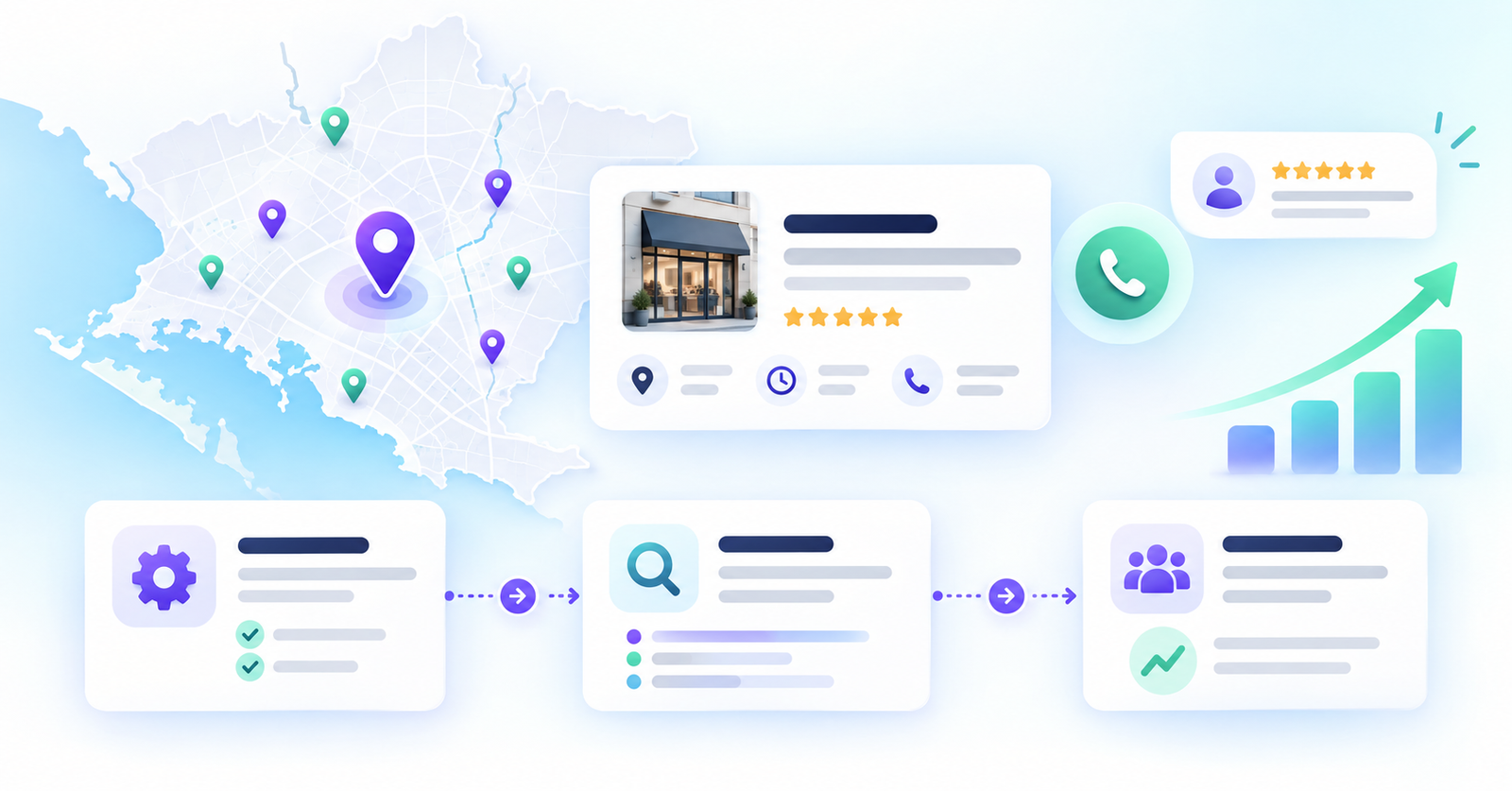
The decision table in this guide prevents page count from becoming the success metric. Create when the intent and evidence are distinct. Consolidate when several thin pages can become one useful hub. Redirect when an old URL has no unique role but has links or history that should be preserved.
Before redirecting, verify the most relevant destination and update internal links. Do not redirect unrelated area pages to the homepage simply to remove them.
What a useful location page contains
Begin with the service and area relationship, not a generic city paragraph. Explain what is available, who the page serves, how delivery works and what affects timing or price. Add authorised examples, project photos, staff or branch details, reviews, directions and local FAQs where they are genuine.
Include the official business name, phone and address only when they are accurate for that location. A service-area page can describe coverage without publishing a false address. The call to action should match the operating model, such as requesting a quote, checking availability or calling for a service window.
Use local evidence instead of place-name repetition
Local relevance comes from useful context. A contractor may discuss building types, access conditions or permit considerations. A professional service may explain consultation availability, travel coverage or language support. An ecommerce company may describe delivery zones and collection points.
Do not insert the neighbourhood name into every heading, image alt attribute and sentence. Repetition makes the page harder to read and does not create real local experience.
Avoid internal competition between location pages
Assign one primary intent to each URL. A service page should target the service generally; a location page should answer how that service is delivered in the location. If several URLs target the same service-area phrase, choose a primary page and merge overlapping sections.
Use descriptive internal links from the Karachi hub to genuinely distinct pages. Avoid sitewide blocks containing dozens of keyword-heavy area anchors. The navigation should help a customer, not merely expose URLs.
Business Profile and website alignment
Keep the Google Business Profile categories, services, hours and service areas accurate. A website page does not justify creating an extra Business Profile. Branch profiles must comply with platform rules and represent real eligible locations.
Use the Google Business Profile checklist for profile operations, while this guide controls the website architecture. For implementation help, see local SEO services.
Measure page quality and outcomes
Track indexation, non-brand impressions, clicks, calls, forms and qualified enquiries by landing page. Compare conversion quality across areas. A page with impressions but no useful actions may have mismatched intent or an unclear offer.
Review location architecture quarterly. If two pages continue to rank for the same queries and provide similar content, consolidation may improve clarity. If a consolidated hub grows enough distinct evidence for one area, a separate page may later become justified.
A safe publishing sequence
First, build or improve the main Karachi service-area hub. Second, create only the strongest one or two distinct pages. Third, measure demand and lead quality. Fourth, expand when evidence supports another URL. This controlled sequence prevents a large thin-page footprint.
Frequently asked questions
How many Karachi area pages should I create?
There is no target number. Create only pages with distinct user value and real operational evidence.
Can I create a page for an area where I have no office?
You may describe a genuine service area without claiming a branch. Keep address and Business Profile information accurate.
Are neighbourhood pages doorway pages?
Not automatically. They become risky when near-identical pages funnel users to the same destination without distinct value.
Should every area page use LocalBusiness schema?
Use structured data only when it accurately represents the visible business information. Do not mark a non-existent branch as a local business.
External references
- Google Business Profile: Tips to improve local ranking
- Google: SEO Starter Guide
- Google: Link best practices

About Huzaifa Mansoor
Huzaifa Mansoor is a Karachi-based SEO consultant and founder of HuzDigital, helping businesses improve technical SEO, content performance, Local SEO and AI-search visibility.