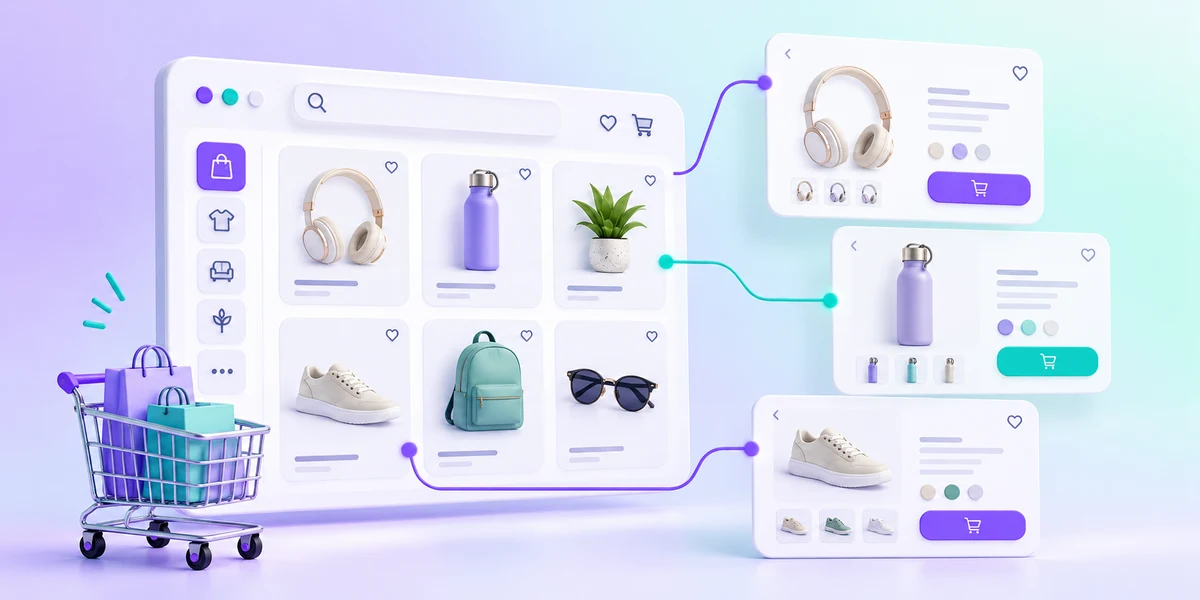
Optimize the page type that best matches the shopper’s decision and the store’s commercial opportunity. Category pages help people compare a range. Product pages help them evaluate a specific item. The right priority depends on demand, inventory, page quality and the path to purchase.
A store does not have to choose one page type forever. It needs an order of work. Improving a product page is less useful when shoppers cannot find it through the category. Improving a category is less useful when its product pages omit the details needed to buy.
Identify what the shopper is choosing
A broad query such as office chairs usually represents a comparison task. A query containing a model name may represent evaluation of one item. Inspect the actual results and customer questions before deciding which page should own the topic.
Do not assign a product URL to a broad category term just because it currently receives impressions. The visitor may need several options. Equally, sending a shopper who knows a precise model to a broad category adds unnecessary work.
Create a short map of important queries, their likely intent and the page that serves them. Keep uncertainty visible. If the results show mixed intent, improve the most suitable existing page and monitor how customers use it before building additional URLs.
Check the inventory behind the page
A category with two inconsistent items may not support a broad selection promise. A product with uncertain availability may not deserve the same effort as a regularly stocked item with clear demand. SEO priorities should reflect what the business can reliably sell.
Discuss stock and margins with the store owner. A popular category may bring visitors but little value if fulfilment costs make most orders unprofitable. A smaller category with stable supply and a useful range could be a better first project.
The following examples illustrate planning choices. They are not universal rules or performance forecasts.
| Store situation | First focus | Reason |
|---|---|---|
| Stable range and broad comparison demand | Category | Helps shoppers choose among options |
| Strong demand for a named model | Product | Answers specific purchase questions |
| Good categories but weak buying details | Product template | Removes uncertainty near purchase |
| Products difficult to reach through navigation | Site structure | Supports discovery across the store |
Make category pages useful for comparison
A category should help shoppers narrow their options. Explain meaningful differences such as capacity, material, compatibility or intended use. Keep the product grid easy to use, and place supporting guidance where it does not bury the available items.
Choose filters based on real decisions. A furniture shopper may need size and material. A software buyer may need supported platform and licence type. Filters that reflect supplier labels rather than customer language make comparison harder.
Avoid adding a large generic paragraph that could sit on any store. Brief useful guidance, descriptive category names and a sensible path to products can be more valuable than repeatedly naming the category. Decisions about indexable filter URLs need a separate technical review, particularly where combinations generate many near identical pages.
Make product pages useful for commitment
Product copy should answer what the customer receives, what the item fits and which constraints matter. Show accurate specifications, clear variants and useful images. Include delivery, returns and availability information that matches the store’s actual policies.
Supplier descriptions can provide facts, but a store can add value by explaining real usage considerations and common questions. Do not invent firsthand testing. If a compatibility statement comes from the manufacturer, say so and keep it up to date.
Test the variant selector and purchase path on a phone. A shopper should know which size, colour or configuration is being purchased. Content improvements cannot compensate for a broken cart button or a checkout that loses the selected variant.
Connect categories and products deliberately
Google’s eCommerce guidance recommends reachable pages through navigation and links. A useful store structure lets visitors move from broad categories to subcategories and products, then return to a meaningful selection. Do not rely only on an internal search box to expose important products.
Use descriptive links and keep category relationships consistent. When a product fits several categories, confirm that navigation, preferred URLs and page signals are implemented intentionally. Avoid changing the structure casually in the middle of a busy sales period.
Start with one representative category and its products. Review the complete journey, implement the improvements and validate the template before extending it. This limits rework if the first design reveals a missing specification or confusing filter.
Evaluate the change at the right level
Review category and product performance separately. A category can help discovery while a product completes the sale, so last page viewed is not the whole story. Compare relevant organic landing pages, enquiries or purchases and inventory changes over a suitable period.
Annotate major promotions and stock changes. Otherwise, a sale or an unavailable item can be mistaken for an SEO effect. Use the evidence to choose the next category rather than assuming the first improvement will transfer unchanged across the store.
Should every category have a long description
No. Write enough to support comparison and explain meaningful distinctions. The required detail depends on the products and the buying decision, not a fixed word count.
Explore HuzDigital’s eCommerce SEO support for category, product and navigation improvements. Request a store review with your platform and the product range you want to prioritise.
Sources
Google eCommerce site structure guidance

About Huzaifa Mansoor
Huzaifa Mansoor is a Karachi-based SEO consultant and founder of HuzDigital, helping businesses improve technical SEO, content performance, Local SEO and AI-search visibility.